

Deploying an employee on an international assignment is a significant logistical puzzle. Global Mobility Managers routinely master the complexities of visas, tax compliance, cost-of-living adjustments, and physical relocation. Yet an employee’s most critical asset, their health, is often left vulnerable during the chaotic pre-departure phase.
While comprehensive international health insurance is a standard fixture of assignment packages, insurance alone doesn't solve the immediate, hands-on challenge of navigating a foreign medical system in an emergency.
Worrying findings, but is it negligence?
Findings published on Relocate Global about new research from Everywhen reveal that employees sent abroad often lack adequate pre-travel support, with only 42% of employers providing health and wellbeing measures before departure. We asked an important question:
Should global mobility managers focus more on employee health and well-being measures before employees depart on an assignment?
A barbed question, since most employers will say they already have a solid duty-of-care policy, but Everywhen on Think Global People says that’s not always the case. Their findings suggest that a third of businesses do not prioritise overseas employees’ health and wellbeing.
This is where employee-led health preparation comes into play. By helping employees take more control of their own health information in pre-departure preparation, Global Mobility Managers can strengthen duty of care, reduce the risk of avoidable medical problems derailing an assignment, and better protect employee well-being before they and their family ever board a flight.
Daniel Rørnes, Human Resources Manager at Publicis Groupe, Denmark, told us, “Duty of care should start well before the employee departs. It is about making sure that the employee has the right information, support and professional advice to make an informed decision about the assignment.
That includes practical and compliance-related matters such as immigration, insurance, healthcare, security, and local requirements, but also the human side: health, wellbeing, family circumstances, cultural preparation, and realistic expectations about the assignment. Policy is the framework. The real duty of care is how the employee experiences that framework.”

The Pre-Departure Blindspot in Corporate Mobility
The weeks leading up to an international relocation are complex and anxiety-inducing. Amid packing and wrapping up domestic projects, employees rarely prioritise compiling their medical history, translating their prescriptions, or detailing their allergies for a foreign audience.
If an expat or their accompanying family member experiences a medical crisis on arrival, they can face potential issues with communication:
1. Language Barriers: Explaining complex medical histories or specific drug names to local emergency staff.
2. Non-Standardised Medical Terms: Brand names for prescription drugs vary widely across borders.
3. Fragmented Information: Finding out a critical allergy or previous surgery when the patient is incapacitated.
Daniel Rørnes explains, “At a minimum, employees should have access to relevant health and safety information, appropriate insurance and healthcare support, and advice about any destination-specific considerations before departure.
But I would distinguish between having access to those things and actually being prepared. For example, an employee may have international health insurance but still not know how to access local healthcare, manage existing medication, navigate language barriers, or handle an emergency. So, from an HR perspective, I would ask: have we done enough to make the employee genuinely prepared, rather than simply technically covered? Insurance is not the same as preparedness.”
For mobility teams, these vulnerabilities convert directly into corporate risk. A medical emergency handled poorly in the first month can contribute to severe illness, traumatic stress and, in the worst cases, a costly premature end to the assignment. Insurance is vital for covering medical expenses, but preparedness, security, and peace of mind should not be ignored.
So Is It Negligence? More Often It Is Programme Design
In most organisations, the gap is not the result of indifference. Global Mobility teams care about the health of their assignees. The gap often comes from how assignment support is structured: who receives it, when it is delivered, and what it is designed to cover. Several patterns stand out.
Settling-in support helps, but it comes late, and not everyone receives it
For many organisations, settling-in services are the main way an assignee accesses local healthcare, typically by supporting registration with a local doctor. Benchmarking surveys suggest that roughly 70% of organisations include settling-in services as part of their core offering.
That figure is encouraging, but it carries two limitations. First, it means a significant minority of organisations do not provide this support at all. Second, even when it is provided, it comes after arrival. In the first days and weeks in a new country, an assignee is most likely to need a repeat prescription or a doctor, and they may need help before settling-in support is in place. Pre-departure preparation - checking medication supply, gathering records, understanding how the local system works - is the only way to cover that window.
Core/flex policies and allowances are changing what is on offer
Many organisations have moved, or are moving, to a core/flex approach to assignment policy, in which a smaller set of core benefits is supplemented by optional provisions. Industry policies and practices surveys have described this shift towards frameworks with core and optional provisions for several years. Where settling-in services sit within the flex element, they may be more likely to be declined or removed, either to manage cost or because the assignee does not yet see the need. Those choices are usually made before the assignee has any experience of the host country’s health system, which is precisely when the value of local support is hardest to judge.
It is also worth asking whether settling-in services are being replaced by settling-in allowances. An allowance gives an assignee money, but it does not tell them how to find a doctor, whether their medication is available locally, or how to explain their medical history in a different language.

Short-term assignees, business travellers and remote workers
Much of the discussion about assignee support implicitly centres on long-term assignments. Yet short-term assignments, extended business trips and commuter arrangements are a significant and growing part of the mix, and employees working remotely from another country add a further group. These employees are much less likely to receive settling-in support, but their health matters just as much to them and their employer.
Two practical points follow. First, the cover these employees hold may differ. Business travel insurance, which often applies to shorter stays, is generally designed for emergencies and may not cover routine care or ongoing treatment, so the policy wording is worth checking. Second, short-term assignees often have little notice before departure, so a lengthy pre-departure programme is not realistic. Groups with the least structured support often have the least time to prepare, so simple, self-service approaches are particularly valuable.
It is not only about emergencies
This article has focused so far on medical emergencies, and rightly so. But for many assignees and their family members, the more frequent challenge is far less dramatic: managing regular medication and long-term conditions in an unfamiliar country.
Questions you can answer before departure, but easily miss, include: Is the medication available locally, and under what name? Will a prescription from home be recognised? Is the medication restricted or controlled in the host country, even though it is routine at home? Are there limits on the quantity that can be carried across a border? How much supply is needed to bridge the gap until a local prescription is arranged?
None of these is a headline emergency, but together they can cause stress, interrupted treatment and, in the worst cases, a deterioration in health - for dependants as much as for the employee.
The conversation many employees will not have
When an assignment is first being discussed, not every employee will be comfortable sharing their own or their family’s medical needs with their employer. The reasons are understandable: concern about how disclosure might affect the opportunity, and the fact that health information is sensitive personal data which attracts additional legal protection in many jurisdictions. Yet those needs may be decisive. Whether a host country can support a child’s treatment or a partner’s medication could determine whether an assignment is right for that family.
If employees feel unable to raise these questions, they may accept an assignment that doesn't suit their circumstances or decline it without explaining why. A practical response is to give employees a private way to research and prepare before they commit, without the employer needing to ask or to know.
This reflects the balance Daniel Rørnes describes,“The strongest HR perspective is not to suggest that employers should control every aspect of an employee's health or family life. The role is to create the information, support and access to professional advice needed for people to make informed decisions and enter an assignment genuinely prepared.”
In this sense, privacy is not an obstacle to supporting health on assignment. It is a design requirement.
The employee experience
One of the primary roles of Global Mobility is to guide assignees through aspects of relocating internationally that they may not have considered. Few employees think about seeing a doctor or refilling a prescription abroad until they need to. Raising the subject early and offering something simple and practical shows the employer has thought about what it is like to live and work somewhere unfamiliar. It signals investment in the employee’s experience, not only in their compliance and cost position. A tool is never a substitute for the human conversation with the Global Mobility team, but it can make that conversation more useful.
Questions to ask of your own programme
For Global Mobility teams, start with a clear view of who is supported and when.
• Which groups (long-term assignees, short-term assignees, commuters, business travellers, remote workers) receive any health-related support before departure, and which only receive it after arrival, if at all?
• Is settling-in support core or flex, and what happens where it is declined or replaced by an allowance?
• Who owns the pre-departure health conversation - Global Mobility, HR, the insurer or the relocation provider - or does each assume another is covering it?
• Can employees and their dependants prepare privately without disclosing anything tot he employer?
• Do pre-departure briefings cover everyday medication (availability, legality, supply and documentation) as well as emergencies?
• Is the approach light enough to work for short-notice assignments and business travel?
Where tools can help

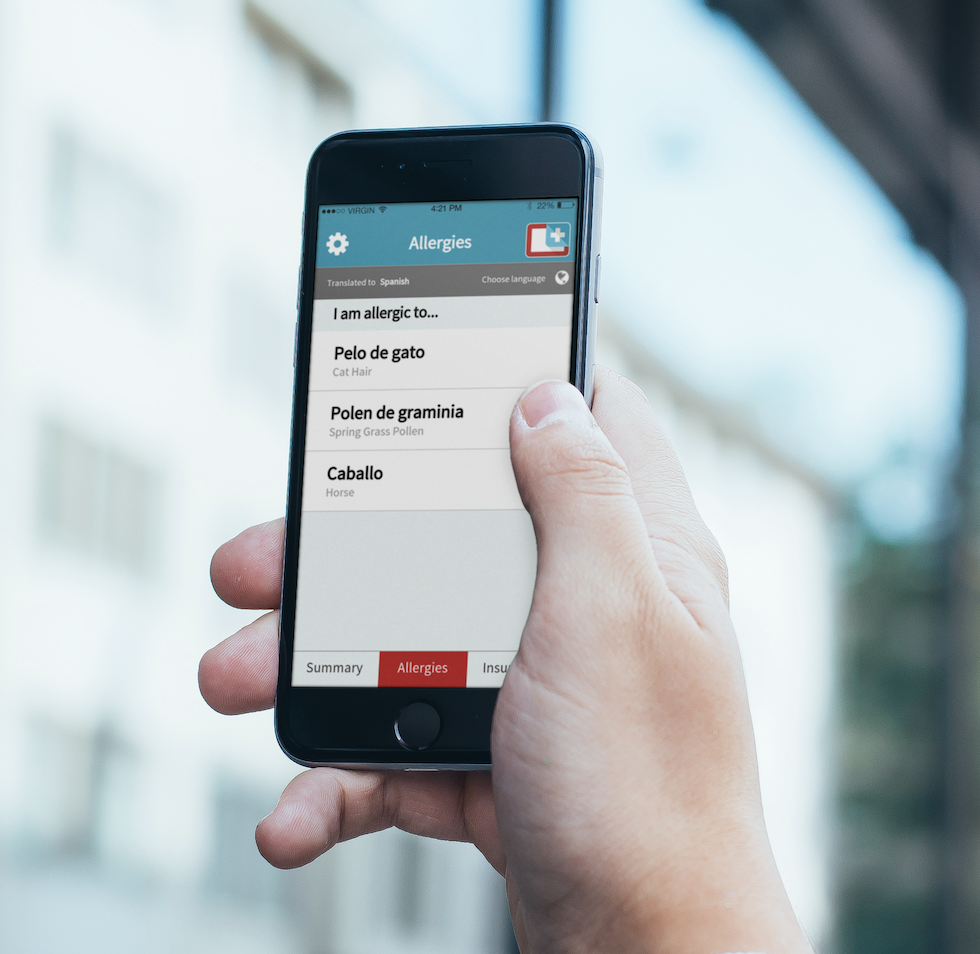
Tools can help close some of these gaps. World Medical Card, the organisation behind this article, offers one example: a combined digital and physical medical profile which the individual holds privately, can be translated into more than 100 languages, and uses internationally recognised codes for conditions and medications. Because accounts are private and not visible to employers, and because the tool is self-service, it can be offered as readily to a short-term assignee or business traveller as to a long-term assignee. It does not replace insurance, settling-in support or conversation with the Global Mobility team, but it can sit alongside them.
What this Means for Global Mobility Professionals
Insurance covers the cost of care. Settling-in support, where it exists, helps in the first weeks. Between the two sits the preparation that happens before departure, and for many employees short-term assignees, those on core-only packages, business travellers, and remote workers - it may be the only support they receive.
As Daniel Rørnes suggests, the question is not whether employees are technically covered, but whether they are genuinely prepared. Global Mobility teams are well placed to ensure the answer is yes for every employee who crosses a border for work, not just those on along-term assignment.
For more information, please contact Paul Watson on +44 (0)7841 205349 or paul.watson@worldmedicalcard.io